Finer Things Gallery from 1999 - 2006
This was the website for the Finer Things Gallery from 1999 - 2006 after which the domain expired and the site disappeared from the web. Recently I was enjoying a month of a working vacation at a lovely condo on Maui resort. I had been asked by a client to see if I could find a website to buy for their new online business. I was looking at domains that would become available when I noticed www.finerthingsgallery.com. My mother who is a collector of emerging art, lives in Nashville and was a frequent visitor to the gallery. Whenever I would visit her she would insist we drop in to see the newest exhibition.
So here I am in Maui, having just spent the day at the Haleakala crater with its panoramic out-of-this-world landscapes, birds-eye views of the Maui central valley, and flora and fauna that exist nowhere else in the world. It was truly fantastic and I must admit, I was wiped out hiking around at 10,023 feet. Nevertheless, I bought the domain that was the Finer Things Gallery's website and, with the help of a good friend, decided to rebuild just a page from its 2006 archived content as an homage to the gallery. My friend does some freelance work for the SEO consultancy TNG/Earthling and convinced their CEO Bob Sakayama to lend a hand. He graciously contributed his time and some development resources to restore the site as well as taught me a bit of html. He was actually very interested in historic websites, so this was a perfect fit. My mother had told me that the gallery was lost during Nashville’s historic flood of May 2010. Rusty Wolfe and Kim Brooks were left, uninsured, to face a loss of millions of dollars. Four years later they reopened the gallery that showed so much of Rusty’s own one-of-a-kind pieces of studio furniture creations along with a new website. However, the last time I was in Nashville to settle my mother's estate, the gallery was not around. Nevertheless, the story of how the Nashville art scene came together to help Rusty Wolfe and Kim Brooks get back on their feet and enable them to reopen the Finer Things Gallery is heartwarming. You can read the full story here: nashvillearts.com/2014/10/flood-october-17/.
And this resurrected site is really just a small thank you and show of appreciation to the wonderful Finer Things Gallery before the flood.
+++
Finer Things Gallery
1898 Nolensville Road
Nashville, TN 37210
Gallery Hours: Tuesday - Saturday 10 - 5

|
|||||||||
 |
 |
||||||||
|
|||||||||
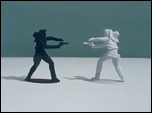
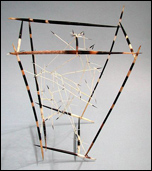

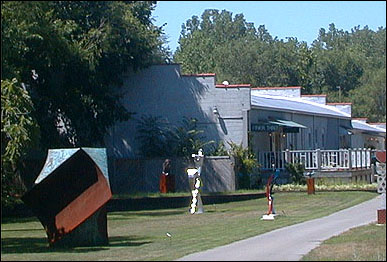
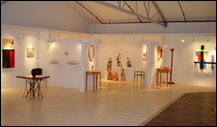
The Complex at Finer Things is an inviting setting for the excellent work we present. Finer Things is composed of an outdoor sculpture gallery, a 6,000 sq. ft. exhibition gallery and a wearable art and gift boutique.
In addition to regular gallery hours, the Complex hosts major events and fundraisers, drawing thousands of art enthusiasts to our location every year.
The Complex at Finer Things is open:
Tuesday - Saturday: 10 - 5:00
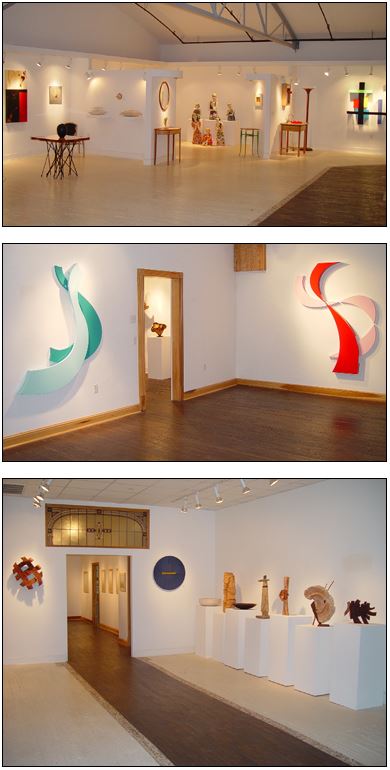
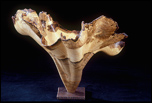
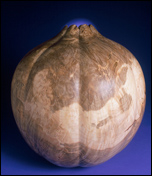
The Exhibition Gallery features the best of contemporary fine art, fine craft and one-of-a-kind furniture. Finer Things represents premier artists from the Nashville area and also strives to bring exceptional art from around the country to local art audiences. The exhibition gallery has traditionally displayed a high concentration of three-dimensional art objects, but it is currently expanding its offerings in painting and other two-dimensional work.
The contemporary setting of the Gallery's 6,000 sq. ft. space is complemented by soaring ceilings, authentic European stained- and leaded-glass windows and original hard wood floors, enhancing its warmth and charm.
The Exhibition Gallery also houses a 2,000 sq. ft. space dedicated to temporary exhibits, featuring group and solo shows which change every six to eight weeks.
Finer Things Gallery
Exhibition Schedule for 2006
March 2 –6, 2006
The Pavilion at Art Expo, Javits Convention Center, New York, NYMarch 4 – April 29, 2006
New Blood 5
Annual exhibition of works from artists new to the gallery
Opening reception: Saturday, March 11, 6-8 p.m.March 23 -26, 2006
ARTscottsdale, WestWorld, Scottsdale, AZMay 6 – May 27, 2006
Outdoor exhibitJune 3 – July 1, 2006
Arrowmont Resident Artists Exhibition
Opening reception: Saturday, June 3, 6-8 p.m.June 15 – 18, 2006
AAF Contemporary Art Fair, Metropolitan Pavilion, New York, NYJuly 1 – September 23, 2006
Rotating exhibition of gallery artistsAugust 28 – September 4, 2006
Gallery closed for summer breakSeptember 30 – November 5, 2006
Sixth Annual Furniture Show
An exhibition of studio furniture
Opening reception: Saturday, September 30, 6-8 p.m.November 11, 2006
Artrageous Gallery TourNovember 9 – 12, 2006
SOFA Chicago, Navy Pier, Chicago, ILNovember 18 – December 23, 2006
Exhibit
Opening reception: Saturday, November 18, 6 – 8 p.m.December 25, 2006 – January 1, 2007
Gallery closed for the holidays
More Background On FinerThingsGallery.com
FinerThingsGallery.com was the online home of Finer Things Gallery, one of Nashville’s most respected contemporary art galleries during the late 1990s and early 2000s. Long before Nashville emerged as a nationally recognized visual arts destination, Finer Things Gallery was introducing collectors, designers, architects, and art enthusiasts to contemporary fine art, fine craft, sculpture, and studio furniture from across the United States.
Founded in 1995 and located at 1898 Nolensville Road in Nashville, Tennessee, the gallery quickly became known for its ambitious exhibitions, large-scale sculpture installations, and commitment to emerging artists. Its website served as a digital extension of that mission, providing information about exhibitions, artists, special events, and national art fair appearances. While the original website disappeared after the domain expired, archived versions preserve the story of a gallery that helped shape Nashville’s cultural landscape.
A Unique Presence in Nashville’s Art Scene
When Finer Things Gallery opened in the mid-1990s, Nashville was already internationally known for music, but its contemporary visual arts community was still developing. The gallery filled an important niche by presenting museum-quality contemporary work in a setting that encouraged both experienced collectors and newcomers to engage with art.
The gallery occupied a converted warehouse that offered a dramatically different atmosphere from traditional commercial galleries. Rather than a small storefront space, visitors entered a sprawling complex that included approximately 6,000 square feet of exhibition space, a dedicated gallery for rotating shows, a boutique, and a two-acre outdoor sculpture garden.
The scale alone made the gallery unusual for the region. Visitors could experience everything from intimate handcrafted objects to monumental sculptures in a single visit. This combination of indoor and outdoor exhibition environments helped distinguish Finer Things from virtually every other gallery in Middle Tennessee.
Ownership and Leadership
The gallery was owned and operated by Rusty Wolfe and Kim Brooks, two figures who became highly respected within Nashville’s arts community.
Rusty Wolfe was particularly well known for his studio furniture creations. His work blurred the line between sculpture and functional design, making him a natural fit for a gallery that celebrated the intersection of fine art and craftsmanship. Under Wolfe and Brooks’ leadership, Finer Things developed a reputation for identifying talented artists before they became widely recognized.
Their vision extended beyond simply selling artwork. They sought to build a cultural destination that would expose Nashville audiences to innovative contemporary work while providing artists with meaningful opportunities to exhibit and connect with collectors.
This philosophy became one of the defining characteristics of the gallery throughout its history.
The Gallery Complex
One of the most memorable aspects of Finer Things Gallery was the physical environment itself.
The exhibition space incorporated:
- Original hardwood floors
- Soaring ceilings
- Historic stained and leaded glass windows
- Open industrial architecture
- Dedicated exhibition galleries
- Outdoor sculpture installations
The design created a warm and welcoming atmosphere that balanced sophistication with accessibility. Visitors frequently described the gallery as both elegant and approachable.
The two-acre sculpture garden was especially significant. Outdoor sculpture spaces of that size were relatively rare in the Southeast. The garden allowed artists to exhibit large-scale works that could not easily be accommodated in conventional gallery settings.
Collectors often spent hours exploring both the indoor and outdoor exhibitions, making the gallery a destination rather than merely a retail art venue.
Focus on Contemporary Art and Craft
Finer Things Gallery developed a distinctive identity by concentrating on contemporary fine art, fine craft, and studio furniture.
The gallery represented artists working in:
- Sculpture
- Ceramics
- Glass
- Painting
- Mixed media
- Woodworking
- Furniture design
- Metalwork
- Fiber arts
Unlike many galleries that focused primarily on paintings, Finer Things became especially known for three-dimensional works.
This emphasis aligned closely with broader trends in the studio craft movement, which gained significant momentum during the 1990s and early 2000s. Collectors increasingly viewed fine craft and studio furniture as legitimate forms of contemporary art rather than merely decorative objects.
The gallery's programming reflected this evolution, presenting works that challenged traditional distinctions between art, design, and craftsmanship.
Supporting Emerging Artists
A defining feature of Finer Things Gallery was its commitment to emerging artists.
Rather than relying exclusively on established names, the gallery regularly introduced new talent to collectors. This commitment was most visible in its annual "New Blood" exhibitions, which showcased artists making their first appearances at the gallery.
These exhibitions became highly anticipated events within Nashville's art community. Collectors often attended specifically to discover new artists before their work gained broader recognition.
Many artists who exhibited at Finer Things later established successful regional and national careers. While not every participant became a household name, the gallery earned respect for its willingness to take risks and support creative experimentation.
This approach helped foster a more dynamic and diverse artistic ecosystem in Nashville.
National Reach Through Major Art Fairs
Although based in Nashville, Finer Things Gallery maintained a significant national presence.
The gallery regularly participated in major art fairs including:
- SOFA New York
- SOFA Chicago
- Affordable Art Fair New York
- Art Expo New York
- ARTscottsdale
Participation in these events brought national visibility to both the gallery and the artists it represented. It also connected Nashville’s art scene to broader conversations taking place within the contemporary art world.
The SOFA fairs were especially important. SOFA, which stood for Sculpture Objects Functional Art and Design, became one of the most influential exhibitions devoted to contemporary three-dimensional art and design in North America. The fair focused on work that crossed traditional boundaries between fine art, decorative arts, and design disciplines. Participation signaled that a gallery was operating at a sophisticated national level.
Notable Exhibition Programming
The gallery maintained an active exhibition schedule throughout the year.
Archived schedules show a variety of programming formats, including:
- Solo exhibitions
- Group exhibitions
- Outdoor sculpture shows
- Artist residency exhibitions
- Furniture exhibitions
- Rotating gallery artist presentations
One particularly notable annual event was the Furniture Show, which highlighted studio furniture makers and designers whose work merged artistic vision with functionality.
These exhibitions attracted collectors interested not only in traditional fine art but also in custom furnishings and collectible design objects.
The gallery’s programming reflected a sophisticated understanding of contemporary art markets and evolving collector interests.
Community Events and Fundraisers
Beyond exhibitions, Finer Things Gallery served as a community gathering place.
The complex hosted:
- Opening receptions
- Fundraisers
- Gallery tours
- Cultural events
- Collector gatherings
- Educational programs
These events often attracted large audiences and helped strengthen connections between artists, collectors, patrons, and arts organizations.
The gallery became known as a place where creative and civic communities intersected. Many visitors attended events even when they were not actively purchasing artwork, contributing to the gallery’s reputation as a cultural hub rather than simply a commercial enterprise.
This role became increasingly important as Nashville's broader arts infrastructure expanded during the 2000s.
Audience and Clientele
Finer Things Gallery appealed to a remarkably diverse audience.
Its visitors included:
- Serious art collectors
- Interior designers
- Architects
- Museum supporters
- Emerging artists
- Corporate buyers
- Tourists
- Students
- Local residents
Because the gallery showcased work across multiple disciplines and price points, it attracted both first-time buyers and experienced collectors.
The outdoor sculpture garden and welcoming atmosphere also made the gallery accessible to visitors who simply wanted to experience art without feeling intimidated by traditional gallery environments.
This broad appeal contributed significantly to its popularity within Nashville’s growing cultural community.
Recognition and Reputation
While Finer Things Gallery may not have accumulated traditional awards on the scale of major museums, its reputation within the art world was substantial.
Artists valued representation by the gallery because of its:
- Strong collector base
- National fair participation
- Professional presentation standards
- Commitment to contemporary work
- Support for emerging talent
Collectors appreciated the gallery’s curatorial vision and willingness to present innovative work that was often unavailable elsewhere in the region.
Its continued participation in major national fairs further reinforced its standing among contemporary art professionals.
The 2010 Nashville Flood
A major turning point in the gallery's history came during Nashville’s historic flood of May 2010.
The flooding devastated many businesses throughout the city, and Finer Things Gallery suffered catastrophic losses. Artwork, furnishings, inventory, and gallery infrastructure were severely damaged.
For a gallery housing thousands of works of art and collectible objects, the financial impact was enormous.
The disaster marked one of the most difficult chapters in the gallery’s history and became a widely discussed story within Nashville's arts community. The loss extended beyond business concerns because many artists had entrusted valuable works to the gallery.
Resilience and Reopening
What followed demonstrated the strength of Nashville’s arts community.
Friends, artists, collectors, and supporters rallied around Rusty Wolfe and Kim Brooks as they worked to rebuild.
Their efforts eventually resulted in the reopening of the gallery several years later. The recovery process became an inspiring example of community support and determination.
For many observers, the gallery’s reopening symbolized not only the resilience of one business but also the resilience of Nashville’s broader creative community following one of the city’s most devastating natural disasters.
The story remains one of the most memorable examples of how the arts community can come together during times of crisis.
Cultural Significance
Finer Things Gallery occupied an important place in Nashville’s cultural evolution.
Its significance extended beyond the artworks it sold.
The gallery helped:
- Promote contemporary art in a music-centered city
- Support emerging artists
- Encourage collecting
- Expand appreciation for fine craft
- Introduce national artistic trends to local audiences
- Create opportunities for community engagement
At a time when Nashville's visual arts ecosystem was still developing, Finer Things provided an important platform for artistic experimentation and cultural exchange.
Many of the conversations about contemporary art that are common in Nashville today were being fostered at venues like Finer Things decades earlier.
Legacy
Although the original gallery is no longer operating in the form that many longtime visitors remember, its influence remains visible.
Former visitors continue to recall:
- The sculpture garden
- Major exhibition openings
- Furniture shows
- Artist receptions
- The distinctive warehouse setting
- The welcoming atmosphere created by Rusty Wolfe and Kim Brooks
The gallery helped establish Nashville as a place where contemporary art could flourish alongside the city's world-famous music industry.
Its support of artists, commitment to innovation, and resilience in the face of adversity ensured that it would be remembered long after the original website disappeared.
FinerThingsGallery.com therefore represents more than an archived website. It serves as a digital reminder of an institution that played a meaningful role in shaping Nashville’s artistic identity during a formative period in the city's cultural history.